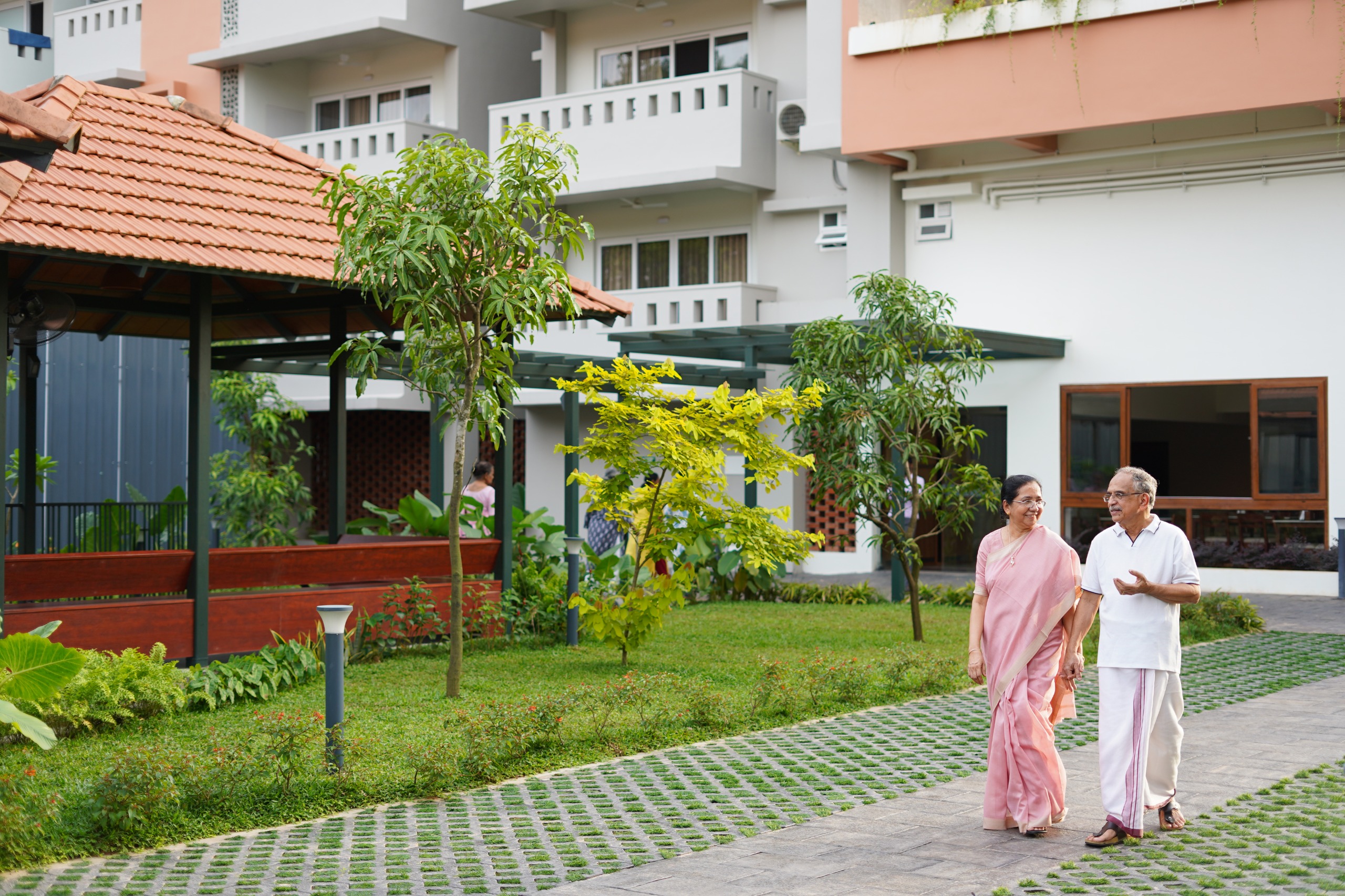
For many children living abroad, home is where their parents are.
You may call them every morning before work. You may speak again at night. You may send groceries, medicines or money when they need them. You may visit Kerala whenever your schedule allows.
But there is one question that becomes harder to ignore as your parents grow older:
Are they really safe living alone at home?
The house where your parents have spent decades may hold countless memories. It may be the place where you grew up, celebrated festivals and welcomed family members. Naturally, your parents may want to continue living there.
But ageing can change what a home means from a safety perspective.
Stairs that once felt effortless can become difficult. A bathroom without safety features can become a risk. Household maintenance can become tiring. A medical emergency can become frightening when nobody is nearby.
For children living abroad, these concerns can be especially difficult because you cannot always be there when your parents need you.
Ageing does not automatically mean that a person cannot live independently. Many seniors continue to lead active and independent lives.
However, their needs can gradually change.
Carrying heavy items, cooking every meal, cleaning a large house, travelling to appointments and managing household repairs may require more effort than before.
There is also the possibility of unexpected situations. A fall, sudden illness or another emergency can become more difficult to manage when an older person is alone.
This does not mean parents should immediately leave their homes.
Instead, families should regularly assess whether the current living arrangement still meets their parents’ needs.
Sometimes parents may not openly say that they are struggling. They may also avoid discussing difficulties because they do not want their children abroad to worry.
Look for changes such as:
One change may not necessarily indicate that a parent needs a different living arrangement. However, several changes together can be a reason to have an honest conversation about additional support.
Today’s retirement homes in Kerala can provide an alternative for seniors who want a comfortable lifestyle with access to community and support.
A suitable retirement community may provide accommodation along with services such as housekeeping, meals, maintenance, recreational activities and wellness programmes.
The exact services differ between communities, so families should carefully check what is actually included before making a decision.
For seniors who remain largely independent, retirement living can provide a social environment without taking away their ability to make everyday choices.
Some parents may require more support with their daily routines.
This is where assisted living in Kerala can become an option.
Assisted living generally focuses on providing support with selected daily activities while allowing residents to maintain independence wherever possible. Depending on the facility and individual requirements, services may include assistance with daily routines, medication support, healthcare coordination, meals and other practical needs.
The right level of support depends on the individual’s circumstances.
Children should discuss their parents’ needs with them and, where appropriate, seek advice from qualified healthcare professionals before making decisions related to care.
When families think about senior care, they often focus on emergencies.
But wellbeing is broader than emergency response.
Parents also need companionship, meaningful activities and opportunities to remain socially connected.
Living alone can sometimes reduce social interaction. A senior living community can create opportunities to meet other residents, participate in activities and maintain a regular routine.
For parents whose children live abroad, this social connection can be particularly valuable.
Instead of spending most of their day alone, they may have people around them to talk to, share meals with and participate in activities.
Perhaps the most important point is this:
Do not make the decision for your parents without involving them.
Your intention may be to protect them, but your parents may see their home as an important part of their independence.
Talk to them openly.
Ask what they enjoy about their current home. Ask what has become difficult. Ask whether they would consider a community where maintenance, meals, activities and support are available.
If possible, visit different retirement homes in Kerala together.
Look at the accommodation, safety arrangements, healthcare access, staff support, activities, food, cleanliness and overall environment.
A virtual tour can also help when children are living abroad and cannot travel immediately.
Living abroad can make you feel guilty about not being physically present.
But supporting your parents does not have to mean being beside them every day.
You can stay involved in their decisions, arrange regular communication, visit when possible and help them choose a living environment that matches their needs.
A well-chosen senior living arrangement can also give you greater reassurance while allowing your parents to maintain their independence and social life.
Your parents may be perfectly comfortable at home today.
But their needs can change gradually.
Instead of waiting for an emergency to force a decision, start the conversation while they are healthy enough to participate fully.
Ask yourself:
If something happened to my parents tonight, would someone be close enough to help them?
If the answer makes you uncomfortable, it may be time to look at the options available.
The goal is not simply to move your parents into a retirement home.
The goal is to help them live in a place where they can feel safe, respected, connected and cared for, while you continue to build your life wherever you are in the world.
Distance may separate families geographically.
It does not have to prevent you from being there for your parents.
Your go-to source for mental health insights, tools, and advice.